

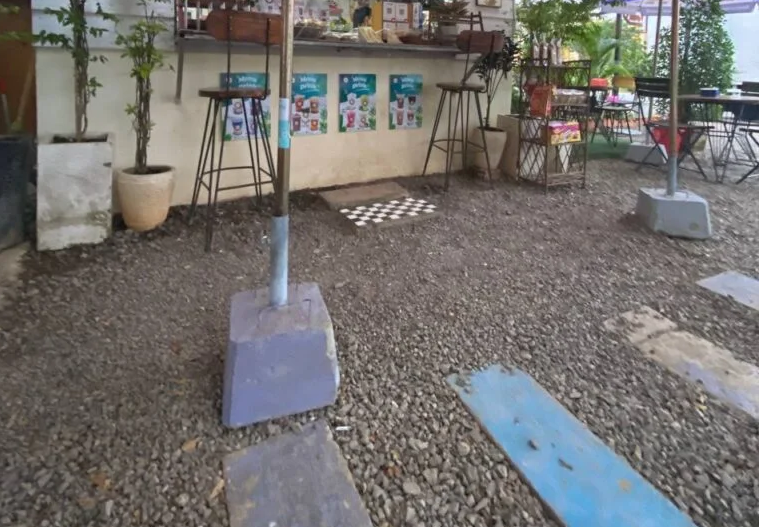
My $10,000 Mistake (And How You Can Avoid It)
Back in 2021, I did something really stupid.
I opened my dream coffee shop without knowing how to price anything. I’d walk into fancy cafés, see a latte for $2.50, then check the street vendors selling iced coffee for 50 cents. My brilliant strategy? Pick a number in the middle and cross my fingers.
Spoiler alert: that shop closed in 2023.
The problem wasn’t my coffee. People loved it. The problem was simple—I had no idea if I was actually making money or slowly going broke with every cup I sold.
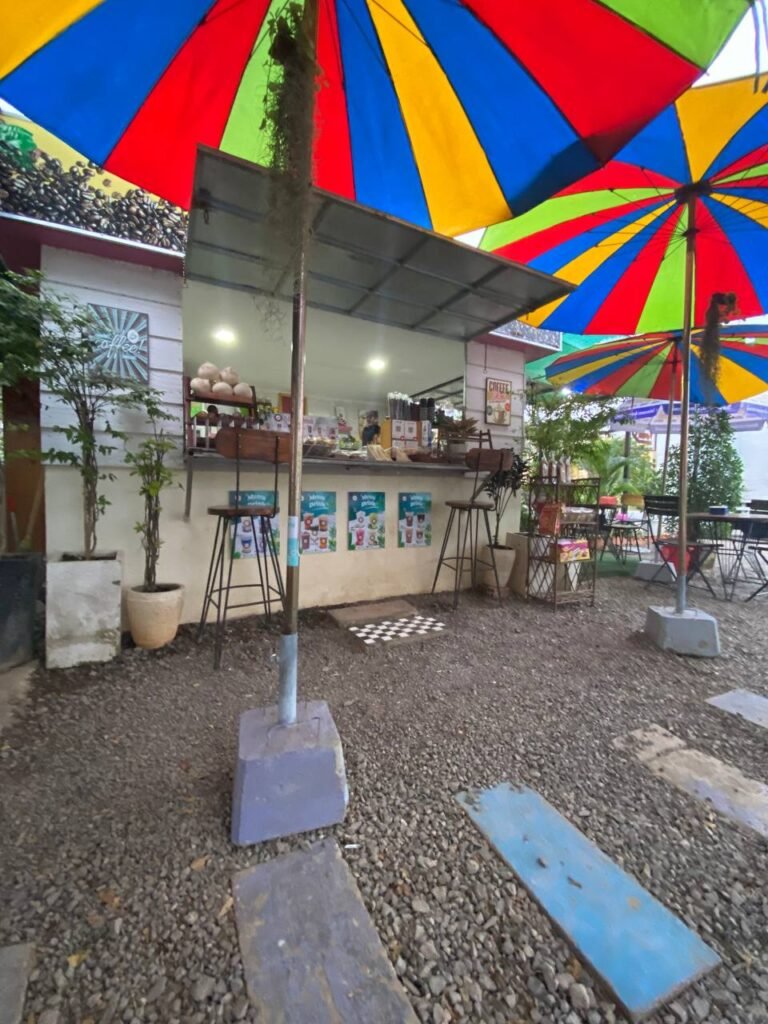
When I reopened as The Press Day Coffee later that year, I changed everything. Now, every single price on my menu exists for a reason. That 4,000 riel cappuccino? There’s real math behind it, not guesswork.
If you’re thinking about opening a coffee shop, or if you already have one and you’re not sure your prices are right, let me show you exactly how I figure this stuff out.
Why You Can’t Just Copy Starbucks (Even If You Charge Half)
Here’s what most beginners think:
“Starbucks charges $4 for a latte. If I charge $2, I’ll definitely make money AND steal their customers!”
Sounds logical, right? It’s completely wrong.
Big coffee chains don’t play by the same rules as small shops. When Starbucks orders milk, they’re buying thousands of gallons at once. Their price per gallon is way lower than what you’ll pay at your local supplier. Same with cups, lids, straws, everything.
You can’t beat their costs, so you can’t use their prices as your guide.
You need to know YOUR costs. Not theirs.
What Really Goes Into One Cup of Coffee
Let me break down one of my drinks: a simple iced cappuccino that I sell for 4,000 riel (about $1 USD).
Here’s where every riel goes:
The Cup and Packaging — 400 riel
This caught me off guard when I first started. You’re not just buying coffee beans. You’re buying:
- The plastic cup
- A lid that actually fits
- A straw
- Maybe a napkin
- A sticker with your logo
Cheap cups crack and leak. Customers hate that. But expensive cups will eat your profits alive. After trying different suppliers, I found a sweet spot at about 400 riel per full set.
Ice — 100 riel
In Cambodia, you can’t mess around with ice quality. Customers expect their drinks to be cold and the ice to be clean. You’re either buying ice or making it yourself, which means paying for a freezer that runs 24/7.
Either way, ice costs money.
Milk — 800 riel
This is usually the most expensive ingredient—even more than the coffee itself.
I use a mix of fresh milk and sweetened condensed milk because that’s what my customers like. If you’re serving Western-style drinks with only fresh milk, your costs might be even higher.
Coffee Beans — 600 riel
I don’t buy the cheapest beans (they taste terrible), but I’m also not buying premium imported coffee at $20 per pound.
I use good-quality local beans from Ratanakiri province. They’re strong, have a nice chocolate flavor, and my customers love them. That’s what matters.
Total ingredient cost: 1,900 riel
So if my ingredients cost 1,900 and I sell for 4,000, I’m making 2,100 riel profit, right?
Wrong again.
The Hidden Costs That Kill Small Coffee Shops
That extra 2,100 riel isn’t pure profit sitting in your pocket. It has to cover a bunch of other expenses that beginners always forget:
- Rent — Even a tiny shop costs money every month, whether you sell 10 cups or 100 cups.
- Electricity — Espresso machines, refrigerators, lights, and fans run all day long. My electric bill was way higher than I expected.
- Waste — You’ll spill milk. You’ll make drinks wrong and have to remake them. Fruit goes bad. Cups get damaged. This stuff adds up fast.
- Your own salary — If your business makes money but you can’t pay yourself anything, you don’t have a business. You have an expensive hobby.
After I pay for all these “invisible” costs, my actual profit per cup is only about 800-1,000 riel.
That’s it. Less than 25 cents USD per drink.
This is why you need good math before you open. Those small profits add up if you’re selling 100+ drinks per day, but if your costs are too high, you’re losing money with every single sale.
Why Most of My Drinks Cost Exactly 4,000 Riel
If you look at my menu, you’ll notice most drinks are priced at 3,500, 4,000, or 4,500 riel. Nothing weird like 3,750 or 4,200.
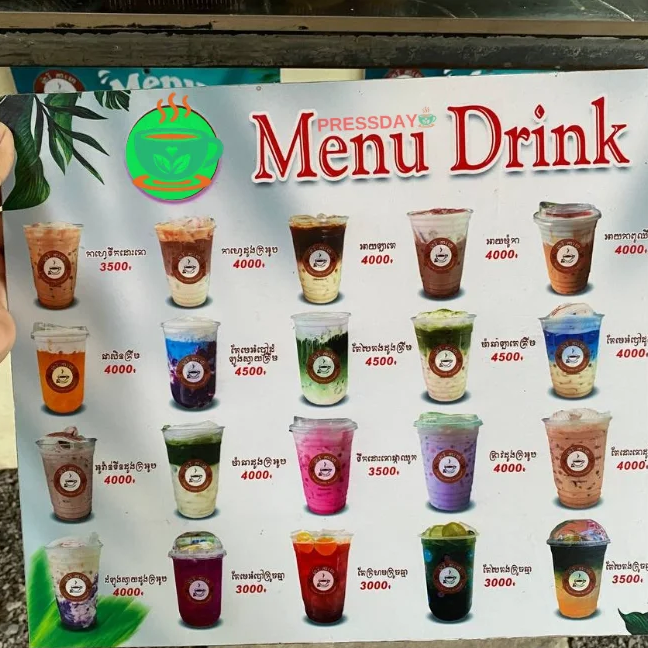
There’s a reason for that.
It Makes Paying Easy
In Cambodia, most people carry 2,000 riel and 5,000 riel bills. When something costs 4,000 riel, customers can hand me one 5,000 bill and get 1,000 back. Simple. Fast. No awkward waiting while I dig around for 300 riel in change.
If I charged 4,300 riel, every single transaction would be slower and more annoying. Bad service makes customers go somewhere else.
It Matches My Customers’ Budgets
My shop isn’t in a fancy shopping mall. My customers are teachers, university students, local workers, and neighbors. They come here almost every day.
For them, 4,000 riel is affordable for a daily coffee. If I charged 8,000 like the big cafés downtown, sure, I’d make more money per cup. But I’d only sell maybe 10 cups a day instead of 100.
I’d rather make small profits on many sales than big profits on almost no sales.
How to Actually Price Your Menu (Step by Step)
Okay, enough about my shop. Here’s how YOU should figure out your prices:
Step 1: List Every Single Ingredient
Don’t forget anything. Write down the coffee, milk, sugar, ice, cup, lid, straw, napkin, everything. If it goes in the drink or gets handed to the customer, it costs money.
Step 2: Calculate the Real Cost Per Cup
This is the tricky part. If a bottle of milk costs $4 and you use 1/10 of the bottle per drink, then milk costs you $0.40 per cup.
Do this math for everything. Be honest. Don’t guess.
Step 3: Add It All Up
This total is called your COGS (Cost of Goods Sold). This is how much it costs you just to make one drink, not counting rent, electricity, or anything else.
Step 4: Multiply by 2.5 to 3
Take your COGS and multiply it by at least 2.5, maybe 3.
So if your COGS is 1,900 riel:
- 1,900 × 2.5 = 4,750 riel
- 1,900 × 3 = 5,700 riel
Your selling price should land somewhere in that range. This markup covers all those hidden costs I mentioned earlier AND leaves you with actual profit.
Step 5: Round to Make Sense
Don’t charge 4,763 riel. Round it to 4,500 or 5,000—whatever makes transactions easy in your country’s currency.
The Most Important Lesson I Learned
If the math doesn’t work on paper, don’t open the shop.
I know that sounds harsh, but it’s way better to learn this with a calculator now than to learn it with an empty bank account in two years.
Pricing isn’t about guessing what feels right. It’s not about charging less than the competition and hoping for the best. It’s about knowing your exact costs and setting prices that let you stay in business.
When I reopened The Press Day Coffee, I promised myself one thing: every price would have a reason. Not a guess, a reason.
That’s the difference between a coffee shop that closes in a year and one that’s still serving customers five years later.
Your Turn
Do the math before you do anything else. Grab a notebook and write down every cost for your signature drink. Be brutally honest.
If the numbers don’t add up to at least 2.5x your costs, you need to either raise your prices, lower your costs, or rethink your business model.
It’s not the fun part of opening a coffee shop, but it’s the part that matters most.
Good luck. And if you ever open a shop in Cambodia, come find me. I’ll buy you a 4,000 riel cappuccino, and we can talk about the real math behind running a small business.
